
Car Water Leaks: The Hidden Impact of Broken Welds from Accidents
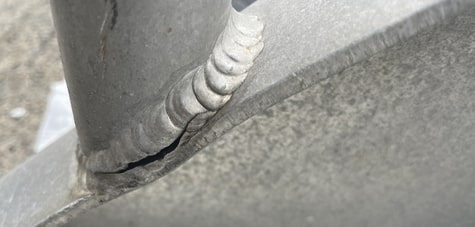
Water inside your car is never a good sign — but one of the sneakiest, most overlooked causes is broken welds from a collision. Even a minor fender bender can compromise the structural welds holding your vehicle together, opening invisible pathways for water to sneak in and do real damage. From mold growth to electrical failures, the consequences can be costly, and they can develop silently for weeks or months before you ever notice.
Below, we break down exactly how broken welds cause leaks, where to look for them, the warning signs you can't afford to ignore, and what to do if your vehicle has already been compromised. It's one of the trickier entries on the list of common vehicle water leaks — precisely because it hides behind a repair that already looks finished.
What Are Automotive Welds — and Why Do They Matter?
Your car is held together by hundreds of factory welds — precise, engineered joints that bond the body panels, frame, pillars, roof, floor, and firewall into a single watertight structure. They aren't just about strength; they create a seamless barrier between your cabin and the outside world. As the American Welding Society notes, automotive welding is one of the most demanding applications in manufacturing, requiring exacting tolerances to maintain both structural integrity and environmental sealing. When those welds are intact, water runs off your car the way it's supposed to. When they're not, you've got a leak waiting to happen.
How Accidents Break Welds — and Why It Causes Leaks
In a collision — even at relatively low speeds — energy travels through the body and can stress or fracture welds far from the actual point of impact. Body shops focus heavily on the cosmetic work (panels, paint, bumpers), but weld integrity at structural seams doesn't always get the same scrutiny. Here's how that translates into leaks:
Gaps and micro-cracks at seam joints: Even a hairline weld crack lets water seep through under pressure — heavy rain, a car wash, or highway driving through standing water. These gaps are nearly invisible but can channel surprising amounts of moisture.
Deformation that breaks the seal geometry: When the body flexes in a crash, panels and pillars can shift out of alignment, distorting the channels that weather stripping seats against.
Damaged or misaligned weather stripping: Broken welds around doors, window surrounds, and the trunk let the metal flex away from position, leaving the rubber without solid backing to compress against. Water bypasses the seal entirely.
REALITY: no amount of new rubber trim will fully solve a leak while the underlying weld is still distorted. New weather stripping can't seal against bent geometry — the structural issue has to be corrected first, or the leak comes right back. The NHTSA sets the structural-integrity standards that show just how critical these joints are.
The Most Common Leak Locations After a Collision
Weld failures tend to appear in predictable places. Knowing where to look helps you catch a problem early.
Warning Signs to Watch For
These are the red flags that warrant immediate investigation — especially if your vehicle has any accident history:
|
Musty or moldy odor The number-one sign of hidden moisture — mold can colonize wet carpet within 24–48 hours. |
Damp mats or carpet Wet carpet after rain with the windows closed means a leak somewhere. |
|
Rust stains at seams Rust-colored streaks along trim or joints mark where water has been running through metal. |
Windows that won't defog Persistent condensation your HVAC can't clear signals trapped interior moisture. |
|
Electrical gremlins Flickering lights, balky sensors, or intermittent power windows can mean water at the wiring. |
Visible drips or puddles Water appearing after rain or a car wash is the clearest tell of all. |
If you're seeing several of these and your vehicle has prior accident history, don't wait. The longer moisture sits inside the structure, the costlier the damage — and the greater the risk of mold reaching the HVAC system, where it circulates through the cabin every time you run the air. Here's why car mold deserves to be taken seriously.
What to Do If You Suspect a Weld-Related Leak
A quick note on who does what: the structural weld repair itself is a job for a certified body shop — that part isn't our lane. But confirming whether water is actually getting in, tracing it to its source, and remediating the mold that follows is squarely our world. We've found leaks that dealers couldn't, and our car mold removal FAQ covers how the remediation side works.
The Bottom Line: Don't Ignore Post-Accident Water Leaks
A leak from broken welds isn't just a nuisance — it's a slow-motion problem that can turn a repairable structural issue into a mold-infested, electrically compromised vehicle that costs far more down the road. The key is connecting the dots between accident history and water intrusion before the damage compounds. If you're dealing with a musty smell, wet floors, or a car that's been in any kind of collision, get a professional to evaluate both the structural and the biological side of the damage — because where there's water, mold is never far behind.
Post-Accident Leak Turning Into a Mold Problem?
As the country's only specialists dedicated entirely to vehicle mold remediation, we trace the moisture, remove the contamination, purge the ventilation system, and verify the air you breathe — backed by a 90-day warranty and 100% mobile service across GA, SC, NC, TN, FL, and AL.
Sources: American Welding Society · NHTSA · EPA Mold Cleanup Guide