Are Dead Mold Spores Harmful?

Are Dead Mold Spores Harmful?

Are Dead Mold Spores Harmful? What Every Car Owner Needs to Know

You found mold in your car. You treated it, cleaned it, and the visible growth is gone. Problem solved, right?

Not exactly.

This is one of the most common and dangerous misconceptions in car mold remediation. Many car owners — and even some detailers — believe that once mold is killed, the threat is neutralized. But dead mold spores can still cause serious health problems, and leaving them behind is a mistake that affects the air quality inside your vehicle every single time you drive.

Let's break down exactly what's happening inside your car, why dead spores still matter, and what real mold remediation actually looks like.


What Are Mold Spores, and Why Do They Matter?

Mold reproduces by releasing microscopic particles called spores into the surrounding environment. Think of them like seeds — lightweight, virtually invisible, and designed to survive long enough to find a new surface and start a fresh colony.

In a car, mold typically begins growing after moisture gets trapped inside — from a leaking window seal, a clogged AC drain line, a forgotten wet gym bag, or even repeated exposure to high humidity. The confined space of a vehicle creates a perfect incubation environment: limited airflow, porous surfaces like carpet and upholstery, and temperatures that fluctuate in ways that encourage mold growth.

Once established, a mold colony continuously releases spores into your car's cabin air. Those spores settle into seat foam, headliners, air vents, and HVAC systems — and they don't disappear just because you spray something on them.


Are Dead Mold Spores Still Harmful? Yes — Here's Why

This is the question we get asked most often, and the answer surprises a lot of people: yes, dead mold spores are still harmful.

When mold is treated with antifungal sprays, bleach, or other chemical treatments, the living organism dies — but the spore particles remain. They don't dissolve or disappear. They continue to sit in your upholstery, float in your cabin air, and cycle through your ventilation system. Here's what that means for your health:

1. Allergic Reactions Don't Require Live Mold

Your immune system reacts to the protein structure of mold spores, not to whether the mold is alive or dead. That means sneezing, watery eyes, skin irritation, and nasal congestion can all still be triggered by dead spores. For people with mold allergies, the relief they expect after treatment may never fully come — because the allergen source is still present.

According to the American Academy of Allergy, Asthma & Immunology (AAAAI), mold is one of the most common environmental allergens, and spore exposure — even from non-living mold — is sufficient to trigger reactions in sensitive individuals.

2. Respiratory Problems Persist

People with asthma, chronic bronchitis, or other respiratory conditions are especially vulnerable. Dead spores can lodge in the airways and cause inflammation, wheezing, coughing, and shortness of breath. The CDC has noted that mold exposure — regardless of viability — is associated with upper respiratory tract symptoms and aggravated asthma.

Spending 30, 60, or 90 minutes a day commuting in a car with unresolved mold spore contamination adds up quickly. This is a daily, repeated exposure event.

3. Mycotoxins Survive the Death of the Mold

Certain mold species — most notably Stachybotrys chartarum, commonly called black mold — produce toxic chemical byproducts called mycotoxins. These compounds are released by the mold as part of its biological process, and critically, they do not break down when the mold dies.

Mycotoxins can cause neurological symptoms, immune suppression, and in cases of prolonged exposure, more serious systemic health effects. They bind to surfaces and particles, making them extraordinarily difficult to remove without professional-grade treatment. The EPA's guidance on mold acknowledges that mycotoxins present real health concerns that require thorough remediation — not just surface-level cleaning.


Why Cars Are Especially High-Risk for Mold Spore Exposure

A mold problem in a 2,000-square-foot home is serious. A mold problem in a 100-cubic-foot car cabin is arguably worse — here's why:

Concentration. Your car is an enclosed space with limited air volume. The same number of spores that might be diluted to safe levels in a large room become highly concentrated in a vehicle cabin.

Recirculation. Your HVAC system actively pulls air through the cabin and pushes it back out. If mold spores are present in your vents, evaporator coil, or cabin air filter, every time you run the heat or air conditioning, you're redistributing spores throughout the interior.

Duration of exposure. The average American spends over 50 minutes per day in their vehicle. That's sustained, repeated exposure in close proximity — often with the windows up.


What Real Car Mold Remediation Looks Like

Killing mold is only the first step. Complete car mold remediation means removing all traces of mold — living and dead — along with eliminating the moisture source that caused it. Here's what that process should include:

Step 1: Find and Fix the Moisture Source

Mold doesn't grow without water. Before anything else is done, the source of moisture must be identified and repaired. Common culprits include:

  • Leaking window or door seals
  • Clogged sunroof drains
  • AC evaporator drain line blockages
  • Damaged weatherstripping
  • Wet floor mats that weren't dried properly

Treating the mold without fixing the moisture source is a temporary fix at best.

Step 2: Remove Affected Materials When Necessary

In severe cases, contaminated carpet, padding, or upholstery may need to be removed entirely. Dead spores are deeply embedded in porous materials and cannot be fully extracted through surface cleaning alone. Professional remediation services assess whether salvage or removal is the appropriate path.

Step 3: HEPA Vacuuming — Non-Negotiable

This step is where most DIY attempts fall short. Standard vacuums — even shop vacs — use filters that allow microscopic spore particles to pass through and get exhausted back into the air. A HEPA-rated vacuum captures particles as small as 0.3 microns, which is sufficient to capture mold spores. Every surface in the vehicle — seats, carpet, headliner, dash crevices — must be vacuumed with HEPA filtration.

Step 4: Professional Treatment for Spores and Mycotoxins

For moderate to severe infestations, professional-grade treatment is strongly recommended. This may include:

  • Chlorine dioxide (ClOâ‚‚) vapor treatments, which penetrate porous surfaces and neutralize both organic compounds and mycotoxins
  • Hydroxyl radical generators, which use UV-generated free radicals to break down odor compounds and spore proteins
  • Ozone shock treatment in unoccupied vehicles, which oxidizes organic material throughout the cabin and HVAC system
  • Antimicrobial encapsulants applied to treated surfaces to prevent future growth

These tools go beyond what any off-the-shelf spray can accomplish — particularly when it comes to spores embedded in foam, ductwork, or under carpet backing.

Step 5: HVAC Decontamination

If your car's ventilation system has been exposed to mold, the cabin air filter must be replaced and the evaporator coil and ductwork must be treated directly. Running the AC after remediation without addressing the HVAC system will reintroduce spores into the cabin air almost immediately.

Step 6: Dry and Dehumidify

After treatment, the vehicle must be thoroughly dried. Leave doors open in a dry environment or use a vehicle-safe desiccant dehumidifier. Products like silica gel canisters or activated charcoal packs placed inside the vehicle between uses help maintain low humidity and prevent recurrence.


How to Prevent Car Mold From Coming Back

Once your car has been properly remediated, prevention is straightforward:

  • Address water intrusion immediately. Don't let a small leak become a big mold problem.
  • Never leave wet items — towels, umbrellas, gym clothes — sitting in a closed vehicle.
  • Run your AC regularly to keep the evaporator from becoming a moisture trap.
  • Replace your cabin air filter at or before the manufacturer's recommended interval.
  • Park in ventilated areas when possible, and crack windows slightly during mild weather to promote air exchange.

The Bottom Line: Don't Stop at Killing the Mold

The question "are dead mold spores harmful?" has a clear answer: yes. Killing the mold is an important step, but it's not the finish line. True car mold remediation means removing all biological material — live and dead — from every surface in the vehicle, decontaminating the HVAC system, eliminating moisture sources, and using appropriate professional-grade methods where the infestation warrants it.

If you're dealing with a mold problem in your vehicle and want to make sure it's handled correctly the first time, Car Mold Guys specializes in professional automotive mold remediation — not just cleaning, but complete removal of spores, odors, and mycotoxins so your car is genuinely safe to drive again.

Contact us today to schedule a vehicle assessment.


Sources: EPA – Mold Course Chapter 1 | CDC – Mold in the Environment | AAAAI – Mold Allergy | EPA – What is a HEPA Filter?


Why Wet Moldy Car Carpet Padding Produces an Unbearable Odor

Why Wet Moldy Car Carpet Padding Produces an Unbearable Odor

Why Wet, Moldy Car Carpet Padding Produces an Unbearable Odor (And What To Do About It)

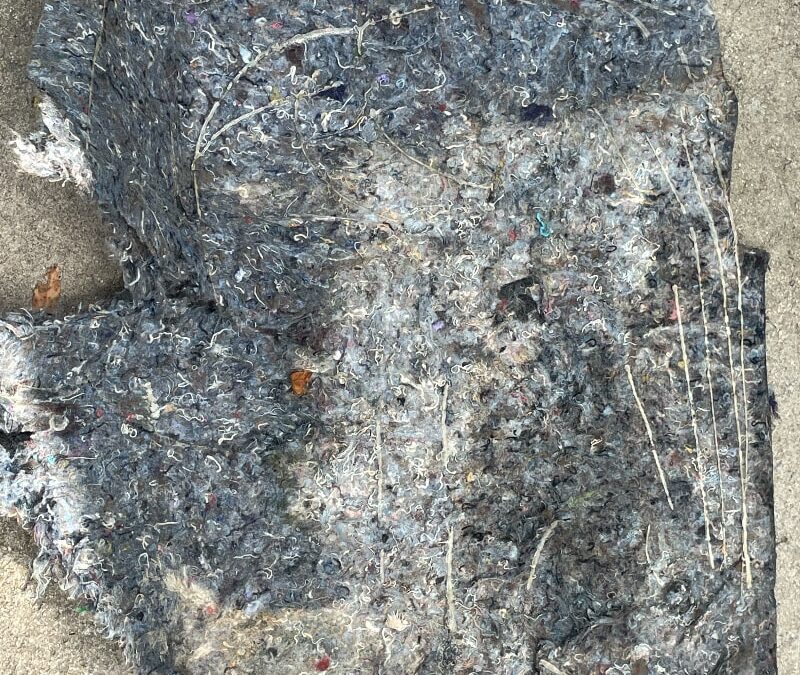
Important: Wet, moldy car carpet padding cannot be safely remediated — it must be replaced. It produces what professionals call a "worm odor" that penetrates deeply into every surrounding surface, making it one of the hardest automotive odors to eliminate even after the contaminated padding has been removed.


The Smell That Stops You in Your Tracks

You reach for your car door, open it, and immediately take a step back. The odor that hits you isn't just musty — it's thick, heavy, and almost alive. If you've experienced this, you already know there's nothing quite like the smell of wet, moldy car carpet padding. It's not a smell you forget, and unfortunately, it's not one that goes away on its own.

As specialists in automotive mold remediation, we've seen this scenario hundreds of times. The good news is that once you understand what's causing it, you can take the right steps to eliminate it permanently — rather than spending money on air fresheners that only mask the problem for a few days.

What Is Car Carpet Padding and Why Does It Matter?

Most car owners don't think twice about what lives beneath their feet. Your vehicle's floor carpet sits on top of a layer of cushioning material — typically open-cell foam or compressed felt — called carpet padding. This layer serves important purposes: it reduces road noise, provides thermal insulation, and gives the floor a softer feel underfoot.

The problem? These same absorbent properties make carpet padding extraordinarily dangerous when moisture gets involved. Unlike hard surfaces that can be wiped dry, padding soaks up water and holds onto it long after the carpet above it appears dry to the touch. That trapped moisture becomes a biological time bomb.


Why the Smell Is So Uniquely Awful

Not all mold smells are created equal. The odor coming from wet car carpet padding has a specific, deeply unpleasant character that experienced remediators often describe as a "worm smell" — earthy, pungent, and almost sweet in a nauseating way. Here's the science behind why it's so bad:

Mold and Bacteria Release Microbial VOCs

As mold colonies and anaerobic bacteria break down the organic material in your padding, they release microbial volatile organic compounds (MVOCs). These are gaseous byproducts of biological activity, and some of them — like geosmin, 2-methylisoborneol, and various aldehydes — are detectable by the human nose at concentrations as low as a few parts per trillion. Your nose is genuinely one of the most sensitive MVOC detectors on the planet, which is exactly why this odor is so overwhelming.

The Confined Space Effect

A car's cabin is essentially a sealed box. Unlike a home with air circulation between rooms, your vehicle concentrates and recirculates that MVOC-laden air every time you run the climate control system. The HVAC system pulls air through the cabin and pushes it right back out — spreading mold spores and odor compounds to every surface in the process.

Stagnant Water Compounds the Problem

Any standing water trapped beneath the padding goes through its own decay cycle. Stagnant water develops its own microbial community of bacteria and algae, contributing sour, sulfur-like notes on top of the mold odor. Combine that with decomposing dust, skin cells, food particles, and road debris that have filtered down through the carpet over the years, and you have an extremely complex odor that simple cleaning products are not equipped to handle.

The Odor Penetrates Surrounding Surfaces

Here's what makes moldy car carpet padding particularly problematic from a professional standpoint: the MVOCs don't stay put. They off-gas continuously, and over time those odor compounds absorb into the vehicle's headliner, seat foam, door panels, and dashboard plastics. This is why removing the contaminated padding doesn't always solve the smell immediately — the odor has already colonized the surrounding materials. Proper remediation must address the entire interior, not just the source.


The Health Risks Are Real — Don't Ignore Them

The smell is warning you. According to the Centers for Disease Control and Prevention (CDC), exposure to mold — even in small amounts over time — can cause or worsen respiratory symptoms, allergic reactions, and immune responses. In a car, where you may sit just inches from a heavily contaminated surface with the windows up and recirculated air running, that exposure is concentrated and continuous.

Symptoms commonly linked to car mold exposure include:

  • Persistent coughing or wheezing
  • Eye, nose, and throat irritation
  • Headaches during or after driving
  • Worsening of asthma symptoms
  • Fatigue and brain fog

Children, elderly passengers, and anyone with asthma, allergies, or a compromised immune system face elevated risk. If your vehicle smells like mold, it's not a cosmetic problem — it's an air quality problem.


Finding the Source: Where Is the Water Coming From?

Wet carpet padding doesn't happen by accident. Something allowed water into your vehicle's floor. Before any remediation work can be effective, you must locate and repair the moisture source — otherwise the padding will simply get wet again. Common culprits include:

Sunroof Drain Lines: Sunroofs have small drain tubes at each corner that route water away from the vehicle. When these clog with debris, water backs up and overflows directly into the headliner and floor. This is one of the most common causes of soaked floor padding we see.

Door and Window Seals: Aging or damaged weather stripping allows water to run down the door frame and pool on the floor. Inspect all four doors and both rear windows.

Cabin Air Filter Housing: A clogged or improperly seated cabin air filter can cause condensation from the HVAC evaporator to overflow into the floor rather than draining properly outside the vehicle. The National Institute for Automotive Service Excellence (ASE) recommends cabin filter inspection at every major service interval for this reason.

Windshield and Rear Window Seals: Failed urethane adhesive around your windshield or rear glass creates a highway for water to run directly onto the dashboard or rear shelf and down into the carpet.

A/C Evaporator Drain: The air conditioner removes humidity from cabin air by condensing it on the evaporator coil. That water is supposed to drain outside the car through a small rubber tube. If the tube clogs, water overflows into the floor under the dash.


Why Moldy Carpet Padding Cannot Be Remediated — Only Replaced

This is the most important thing we can tell you: if your carpet padding is wet and showing signs of mold growth, it cannot be cleaned and kept. Unlike hard surfaces, open-cell foam and compressed felt are porous at a microscopic level. Mold hyphae grow into and through the material, making it impossible to kill and remove all biological contamination without destroying the structural integrity of the padding itself.

Any professional or company that tells you they can clean and save contaminated padding is either uninformed or being dishonest with you. The padding must come out.

The good news: automotive carpet padding is among the least expensive materials in your vehicle's interior. Replacing it is far cheaper than the cost of repeated failed remediation attempts, and it eliminates the biological source permanently.


The Professional Remediation Process

A proper car mold remediation job for water-damaged carpet and padding involves more than pulling out the floor material. Here's what a thorough process looks like:

  1. Moisture source identification and repair — No remediation is started until the leak is fixed.
  2. Full carpet and padding removal — All contaminated material is bagged and disposed of properly.
  3. Subfloor treatment — The bare metal floorpan is treated with an EPA-registered antimicrobial solution and allowed to dry completely. The EPA maintains a registered pesticide database that remediators should reference for approved products.
  4. MVOC odor treatment of the cabin — Because VOCs have absorbed into surrounding surfaces, a secondary odor treatment (hydroxyl generation, chlorine dioxide application, or encapsulant sealant) is often necessary for full odor elimination.
  5. New padding installation and carpet re-installation — Fresh materials go back in only after the subfloor has passed a moisture reading test.

Preventing Car Carpet Mold in the Future

Once you've gone through remediation, protecting your investment is straightforward:

  • Inspect door and window seals annually and replace any cracking or compressed weather stripping immediately.
  • Clear sunroof drains every spring and fall with compressed air.
  • Address spills the same day — never let liquid sit in your carpet overnight.
  • Use moisture-absorbing products like silica gel packs or a quality car dehumidifier in humid climates. Georgia summers, in particular, create conditions where even ambient humidity can contribute to moisture buildup in vehicles that sit for extended periods.
  • Run your A/C on recirculate mode occasionally to pull humidity from the cabin air.

Final Thoughts: Don't Mask It — Fix It

Wet, moldy car carpet padding is one of those problems that refuses to be ignored — and for good reason. It's damaging your vehicle's interior, degrading your air quality, and potentially affecting your health every time you drive. Air fresheners, baking soda, and ozone treatments can reduce the odor temporarily, but they cannot eliminate the biological source.

If your car smells like mold and you've noticed it's coming from the floor, don't wait. The longer contaminated padding sits in your vehicle, the deeper those odor compounds penetrate into the surrounding materials — and the more expensive the remediation becomes.

Car Mold Guys specializes in mobile auto mold remediation throughout Georgia. We come to you, we find the source, and we fix it properly — so you can get back to driving a car that smells the way it should.

Contact us today to schedule your inspection.


Categories: Car Mold Remediation | Car Mold Removal | Car Water Leaks | Car Air Quality | Mold Science

Detecting mold in a car

Detecting mold in a car

How to Detect Mold in Your Car: Warning Signs, Health Risks & What to Do Next

That strange smell hitting you every time you climb into your car? It might not just be old fast food wrappers or a forgotten gym bag. If there's a musty, earthy odor lingering in your vehicle — especially after rain or humid weather — there's a real chance you're dealing with mold in your car. And if you are, ignoring it isn't an option.

Car mold is more common than most drivers realize, and it can appear in virtually any vehicle, regardless of age or condition. From a leaky door seal after a Georgia thunderstorm to a forgotten wet umbrella left on the floorboard, it doesn't take much for mold spores to take hold and start spreading. Knowing how to detect car mold early can save you thousands in remediation costs — and protect your health in the process.

In this guide, we'll walk you through every warning sign of car interior mold, explain the serious health risks involved, and tell you exactly what to do if you find it.


Why Cars Are a Breeding Ground for Mold

Before we get into detection, it helps to understand why mold loves your car's interior. According to the EPA, mold thrives in environments with moisture, organic material, and limited airflow — and your car checks all three boxes.

Car interiors are lined with fabric, foam, carpet, and porous materials that absorb moisture easily. When water gets in through a cracked seal, a sunroof leak, a spill, or even heavy condensation, those materials hold onto that moisture. Your car's enclosed cabin traps humidity, especially in warmer climates, creating the perfect incubation environment for mold growth.

Common entry points for moisture include:

  • Leaky door or window seals
  • Sunroof or moonroof drainage clogs
  • Wet items left inside (umbrellas, gym bags, towels)
  • Flood or water damage from storms
  • AC system condensation that hasn't been properly draining
  • Spilled drinks or food left untreated

Once mold takes root in your car's carpet, seats, or air ducts, it spreads quickly — especially in summer months when heat and humidity work together to accelerate growth.


5 Key Warning Signs of Mold in Your Car

1. A Persistent Musty or Earthy Smell

The most common first indicator of car mold is the smell. A musty, damp, or musty smell in your car — particularly one that comes on when you turn on the air conditioning — is one of the earliest and most reliable signs that mold or mildew is present somewhere in your vehicle.

Don't brush it off as "old car smell." That earthy, stale odor is actually produced by microbial volatile organic compounds (MVOCs), gases released by active mold colonies as they feed and grow. If you're smelling it, the mold is alive and spreading.

2. Visible Dark Spots or Discoloration

Black mold in a car or any other color of mold often appears as spots, patches, or fuzzy growth on surfaces. You might notice:

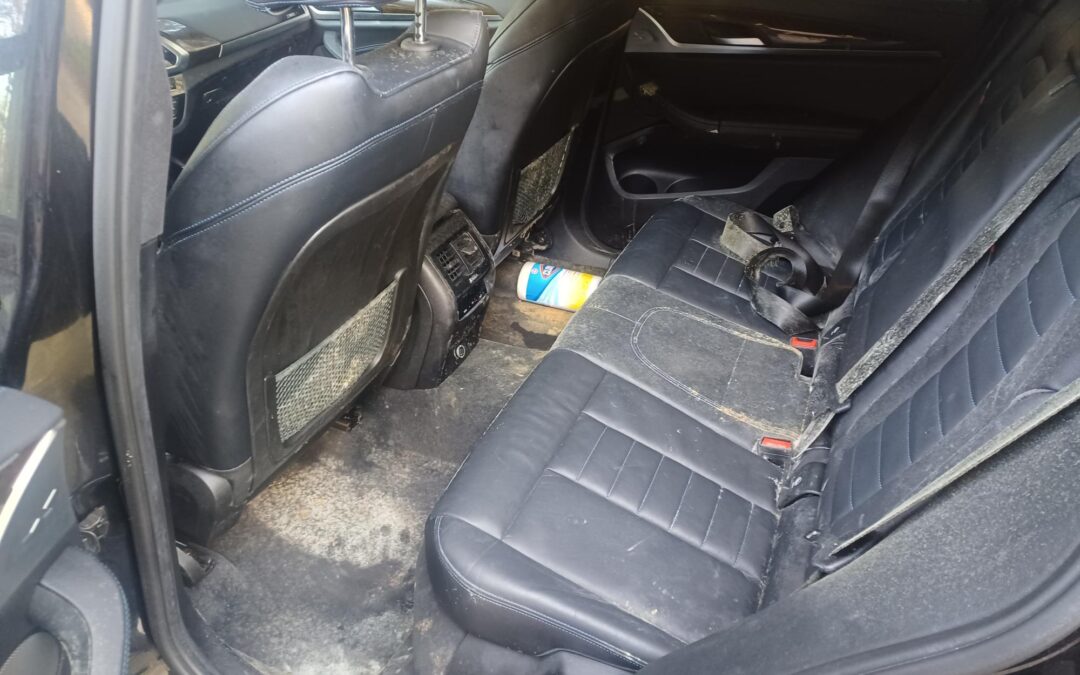
  • Green, black, or white spots on seat fabric, carpet, or headliner
  • Dark staining around seams, stitching, or under floor mats
  • Fuzzy or powdery growth on plastic trim near vents or door panels
  • Brownish discoloration on the underside of car mats or in seat crevices

Mold doesn't always grow in obvious places. Be sure to check underneath seats, in the trunk, behind the spare tire, and along the base of the doors where water tends to pool.

3. Evidence of Water Damage or Dampness

If your car has ever had any type of water intrusion — even a minor one — you're at elevated risk for mold growth. Signs of water damage to look for include:

  • Wet or damp carpeting, even when it hasn't rained recently
  • Fogging or condensation on the inside of windows that won't go away
  • Stiff, crunchy, or discolored seat foam after drying
  • Rust or water stain lines on floor panels or door sills

Any vehicle with a history of flooding, a leaky sunroof, or a broken window seal should be treated as a potential mold risk until fully inspected.

4. Allergy-Like Symptoms When Inside the Vehicle

One of the most overlooked car mold symptoms is how you feel when you're in your car. Mold releases spores and mycotoxins into the air, which your HVAC system can circulate throughout the cabin. If you or your passengers experience any of the following primarily while in your car — and they improve when you get out — mold exposure is a likely culprit:

  • Sneezing and nasal congestion
  • Watery or itchy eyes
  • Skin irritation or rashes
  • Headaches or brain fog
  • Sore throat or coughing

These symptoms are especially significant for people with asthma, mold allergies, or compromised immune systems. According to the CDC, exposure to mold can trigger allergic responses and worsen respiratory conditions even in otherwise healthy individuals.

5. Respiratory Issues or Worsening Asthma

Beyond the allergy symptoms, prolonged exposure to black mold in a car or any toxic mold variety can lead to more serious respiratory complications. If you regularly spend time in a mold-affected vehicle and you've noticed wheezing, shortness of breath, chest tightness, or worsening asthma symptoms, the air quality inside your car may be to blame.

This is not something to wait out. The longer mold is present and actively growing in your vehicle, the greater the concentration of spores in the air you're breathing during your commute.


High-Risk Areas for Car Interior Mold

When inspecting your vehicle, focus your attention on these common hotspots:

  • Carpet and floor mats — especially under seats and in the trunk
  • Seat foam and fabric — particularly in seams and under seat covers
  • Headliner — mold often grows unseen before staining appears
  • Air conditioning evaporator and ducts — a prime source of "AC mold smell"
  • Dashboard vents — where moisture and organic dust accumulate
  • Door panels and sill plates — where water pools from open windows or leaks
  • Spare tire compartment — often overlooked and prone to moisture trapping

How to Test for Mold in Your Car

If you suspect car interior mold but can't locate it visually, there are a few options:

DIY Mold Test Kits: Available at most home improvement stores, these kits involve placing a petri dish inside your vehicle for a set period and then mailing it to a lab. They can confirm the presence of mold spores but won't tell you the concentration or exact location. EMSL Analytical and similar labs offer professional-grade air quality testing kits for consumers.

Professional Inspection: A certified auto mold remediation specialist can perform a full inspection, identify hidden mold colonies, test air quality inside the cabin, and give you a detailed assessment of what you're dealing with. This is the most accurate option, especially if mold is suspected in the HVAC system or behind interior panels.


What to Do If You Find Mold in Your Car

Finding mold in your car isn't a death sentence for your vehicle — but it does require immediate, professional-grade action. Here's what not to do: don't try to bleach it, mask it with air fresheners, or just dry it out and hope for the best. DIY approaches almost always miss hidden mold colonies and can disturb spores, spreading contamination further.

A professional car mold remediation service will:

  1. Identify all affected areas, including hidden mold in foam, ducts, and panels
  2. Use HEPA filtration and containment to prevent cross-contamination
  3. Apply EPA-registered antimicrobial treatments to kill active mold
  4. Address the source of moisture to prevent regrowth
  5. Deodorize with professional-grade odor eliminators like chlorine dioxide or hydroxyl generation technology

Acting fast matters. The IICRC — the Institute of Inspection, Cleaning and Restoration Certification — recommends that mold remediation begin within 24–48 hours of moisture discovery to prevent widespread growth.


Don't Wait — Get Your Car Inspected Today

Mold in a car is a health hazard, not just an inconvenience. Whether you've noticed a musty smell, spotted discoloration on your seats, or you've been sneezing every time you start your commute, it's time to get your vehicle properly inspected and treated.

At Car Mold Guys, we specialize exclusively in auto mold removal and car interior mold remediation across Georgia. Our mobile service comes to you — no need to drop your car off anywhere. We use professional-grade equipment and proven remediation methods to eliminate mold at the source, not just cover it up.

Contact Car Mold Guys today for a free phone consultation and get your car back to clean, safe, and mold-free — fast.

Call Today!