
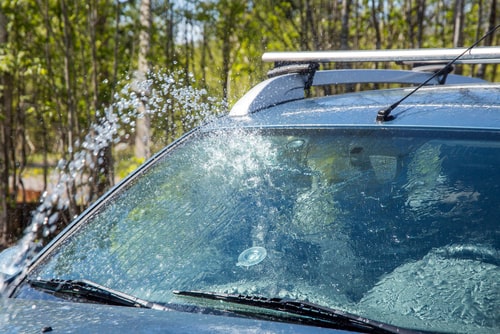

Is Your Windshield Leaking Water Into Your Car?
Few things are more frustrating than discovering a soggy carpet or waterlogged dashboard — and for thousands of vehicle owners every year, the culprit is hiding in plain sight: a faulty or improperly installed windshield. A windshield leak can start as a minor annoyance and quietly escalate into a serious, expensive problem.
Here's exactly how windshields let water in, the warning signs to watch for, the real consequences of ignoring it, and how to fix or prevent a leaking windshield before it becomes a disaster. It's one of the trickier entries on the list of common vehicle water leaks — because the damage shows up far from the glass itself.
Why Windshields Are a Common Source of Water Leaks
Your windshield isn't just glass — it's a structural component, bonded to the frame with a specialized urethane adhesive that forms a watertight seal. When it's intact, rain and car-wash water stay outside where they belong. When it fails, water finds a way in. And unlike factory windshields installed under controlled conditions, replacement windshields are a far more common source of leaks — the Auto Glass Safety Council, which publishes the ANSI/AGSC/AGRSS installation standard, exists precisely because not every glass shop follows it. The usual reasons a seal fails:
Improper installation: The number-one cause. A rushed job, the wrong adhesive, too little urethane, or inadequate cure time leaves gaps between the glass and the pinch weld — invisible channels straight into the cabin.
Failed or aging adhesive: Even a perfect install degrades over time. UV, Georgia's intense heat, freeze-thaw cycles, and the constant flex of driving all break down the urethane.
Pinch-weld or frame damage: After a collision or bodywork, a warped, rusted, or poorly repaired frame makes a uniform seal nearly impossible — often overlapping with broken welds from accidents.
Chips and edge cracks: Damage near where the glass meets the seal compromises the bond, and water will exploit even the smallest pathway.
Warning Signs Your Windshield Is Leaking
Catching it early is critical — the longer water has access, the more damage accumulates. Watch for:
Wet floor under the dash or beside the windshield supports.
Water streaks running down the trim or across the dash.
Persistent condensation even after the defroster runs.
Often the first sign moisture has been present long enough for mold.
Visible wet spots during heavy rain or after a car wash.
Peeling or sagging material near the top of the windshield.
The Real Consequences of a Leaking Windshield
A leaking windshield sets off a chain reaction that can touch nearly every system in your vehicle.
How to Fix a Leaking Windshield
The glass work here is a job for a certified auto glass technician — not a DIY reseal. Here's how the repair should go:
|
1
|
Identify the leak point
With someone inside, slowly run a hose along the windshield edges and watch for drips. A glass shop can pinpoint it precisely with leak-detection dye or an electronic moisture meter. |
|
2
|
Choose the right approach
Minor edge gaps can be sealed with fresh urethane in place; widespread adhesive failure means removing the glass, stripping the pinch weld, and reinstalling correctly; a rusted pinch weld needs bodywork first; edge cracks usually mean replacement. |
|
3
|
Allow proper cure time
Urethane has a minimum safe drive-away time (MDAT) — usually one to several hours. Confirm it with your installer and don't rush it. |
|
4
|
Address the interior water damage
Fixing the glass stops new water — it does nothing for what's already inside. Soaked carpet padding and insulation need professional drying, and any mold needs remediation — EPA guidance is that porous material which can't be thoroughly cleaned and dried gets removed and replaced. |
REALITY: driving before the urethane cures is one of the most common ways a fresh seal fails. The body flexes as you drive, and a not-yet-cured bond can break before it ever sets — putting you right back where you started. Respect the MDAT.
Where Car Mold Guys Comes In
REALITY: resealing the windshield turns off the faucet — it doesn't undo the water that already soaked in, or the mold that started growing. Those are two separate jobs, and skipping the second is why so many “fixed” cars still smell musty.
A windshield reseal is one of the few leaks we leave to the glass pros — but the water damage and mold it leaves behind is exactly our world. Real remediation means removing contaminated padding, chlorine-dioxide gas treatment (not ozone, which degrades your seals), a ventilation-system purge, and verification — all aligned to the ANSI/IICRC S520 standard. It's why you can't just spray the smell away. Car Mold Guys is 100% mobile across Georgia, South Carolina, North Carolina, Tennessee, Florida and Alabama, backed by a 90-day warranty — and our FAQ covers the details.
Preventing Windshield Leaks Before They Start
- Vet your installer. Choose an AGSC-registered shop that uses OEM or OEM-equivalent adhesive systems.
- Inspect the edges seasonally. Look for lifting, separation, or discoloration of the seal — especially after harsh winters or brutal summers.
- Act on chips and cracks immediately. A chip is a quick fix; left alone it becomes a crack, and a crack near the seal edge is a leak waiting to happen.
- Re-check after collision repair. Confirm the windshield seal was inspected and resealed if the surrounding panels were worked on.
- Stay ahead of other entry points. Scan for other common leak sources while you're at it — they often travel together.
The Bottom Line
A windshield leak is rarely just about the windshield — it's about everything the water touches after it gets in: your carpet, your padding, your wiring, your frame, and potentially your health. Caught early, it's very fixable. Caught late, it's costly and complicated. If you're dealing with musty odors, damp carpet, or visible mold from a leak, get the glass resealed by a pro and the interior properly remediated — act at the first sign of trouble.
Windshield resealed, but the car still smells musty?
Once the glass is fixed, that's our cue. As the country's only specialists dedicated entirely to vehicle mold remediation, Car Mold Guys dries the interior, removes the contamination, purges the ventilation system, and verifies the air you breathe — backed by a 90-day warranty and 100% mobile service across Georgia, South Carolina, North Carolina, Tennessee, Florida and Alabama.