
Replacing Moldy Car Foam Padding: What Every Car Owner Needs to Know
If your car has taken on water — from a flood, a leaking window seal, a spilled drink left unattended, or a hidden AC drain clog — there's a silent threat beneath your feet that most owners never think about: the carpet padding. The carpet on top may dry within a day or two, but the dense foam padding underneath is a different story. Once it gets wet, it can stay saturated for weeks, sometimes months — and that trapped moisture becomes a reliable breeding ground for mold.
The result is a car that smells like a basement, an interior that's genuinely unhealthy to breathe in, and a vehicle no amount of air freshener will fix. At Car Mold Guys we've seen this play out in hundreds of vehicles. Here's why moldy carpet padding is such a serious problem, how it progresses, why replacement is usually the only real solution — and what professional remediation actually looks like.
Why Car Carpet Padding Stays Wet So Long
Here's something most car owners don't realize: the carpet in your vehicle acts almost like a lid over the padding below it, trapping moisture in rather than letting it evaporate. When water enters — through rain, a leak, or flooding — it soaks through the carpet and saturates the padding, then the carpet seals over the top and blocks airflow. Without circulation, that padding has virtually no way to dry on its own.
The foam in most automotive padding is especially vulnerable because it's highly porous — it absorbs and holds water like a sponge. A closed car interior that's warm, dark, and humid gives mold exactly the conditions it needs. EPA guidance on mold and moisture is clear that mold can begin growing on wet materials in as little as 24 to 48 hours under the right conditions, and a parked vehicle in the Southeast's climate exceeds those conditions for much of the year.
If your car got wet and wasn't professionally dried within 7 to 10 days, there's a very good chance the padding beneath your carpet is already growing mold — even if the carpet surface feels dry and the interior smells fine. The absence of a musty odor doesn't mean the padding is clean; it means the colony hasn't yet grown large enough to produce detectable MVOCs. That comes next.
What Happens Inside Wet Carpet Padding — Day by Day
Once moisture is trapped in the padding, a predictable sequence unfolds. Understanding this timeline explains why acting quickly matters so much — and why waiting always makes things worse.
Why Moldy Padding Can't Be Saved — Only Replaced
This is the part that surprises many car owners. The instinct is to clean it, spray it with an antifungal product, run an ozone machine, or seal it with an encapsulant. But once padding reaches significant infestation, none of those approaches solve the problem. Here's why, specifically.
The mold penetrates the full thickness of the material
Foam padding is porous all the way through, so mold doesn't just grow on the surface — it colonizes every pore through the full depth. Surface sprays and steam can't reach deep enough to neutralize the contamination inside, so what looks treated on top keeps growing unchecked within.
Residual moisture keeps the colony alive
Even after a surface treatment, moisture trapped in the center of the padding continues to feed the mold. Without removing the material entirely, you're managing the symptom while the cause persists — and the padding re-infests from the inside out regardless of what you apply to the exterior.
MVOCs become embedded in the foam
The gases responsible for that persistent musty smell get absorbed into the foam structure itself over time. No odor treatment, encapsulant, or ozone shock will fully eliminate the odor while the contaminated padding remains in the vehicle. The smell source is the material.
The odor always returns
Masking treatments may buy a week or two of apparent relief, but the underlying mold keeps producing MVOCs, so the smell reliably returns — often worse than before — in heat and humidity. Across the Southeast, that means the problem re-announces itself with every warm afternoon.
ALERT: The longer contaminated padding stays in a vehicle, the more deeply MVOCs penetrate the headliner, seat foam, door panels, and HVAC system — expanding the scope and cost of full remediation. Replacing the padding promptly is nearly always cheaper than chasing the secondary contamination it causes.
What a Professional Padding Inspection Looks Like
Every Car Mold Guys service begins with a thorough inspection, and that inspection always includes the carpet padding. Here's what the process involves:
Moisture assessment. Professional-grade moisture meters detect dampness beneath the carpet surface, so we can find wet areas even when the carpet itself feels dry to the touch — the most common scenario when padding has been wet for days or weeks.
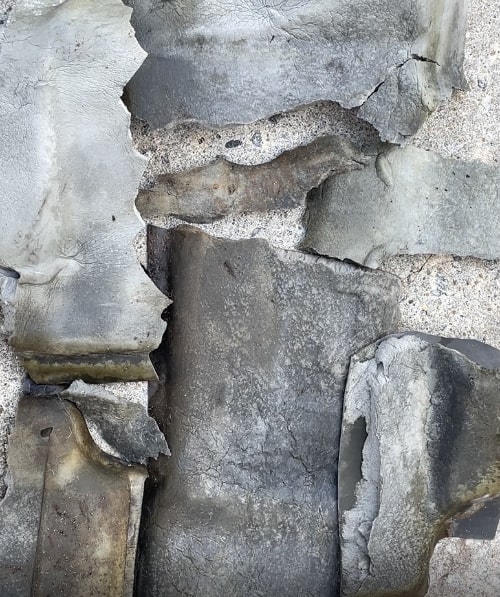
Visual inspection. We pull back sections of carpet to inspect the padding directly. Healthy padding is light-colored and odor-neutral; infested padding shows dark black, green, or gray staining and a strong musty odor, with discoloration that often runs through the full thickness rather than just the surface.
Odor evaluation. We gauge the type and intensity of the smell. A faint musty note may indicate early-stage growth where remediation is still viable; a strong, persistent odor — especially one that's worse in heat — almost always signals significant infestation that's been producing MVOCs for a while.
Honest determination. Based on the findings, we give a clear recommendation. If the padding is lightly affected and the moisture event was recent, remediation may be enough. If it shows visible mold, significant discoloration, or has been wet more than seven to ten days, replacement is what we recommend — because it's the only thing that actually works. We inspect first, then advise.
The Health Risk You're Breathing In
It's worth pausing on what driving a mold-contaminated car actually means for your health. Every time you start the vehicle, the HVAC system pulls air from the cabin and recirculates it — so in a car with mold in the carpet padding, you and your passengers are breathing spores and mycotoxins on every drive.
For healthy adults this can show up as persistent allergy symptoms, headaches, or fatigue that seem tied to driving. For children, older adults, or anyone with respiratory conditions or a weakened immune system, the risks are considerably higher — our post on how mold affects the respiratory system covers the mechanisms. Public-health guidance is consistent on one point: address a mold problem promptly and completely, not partially. Partial treatment leaves the source intact and the health risk ongoing.
Don't Mask It — Fix It
The temptation to reach for an air freshener, a cheap ozone machine, or a surface spray is understandable — those things feel like solutions because they briefly change how the car smells. But they don't address what's happening inside the padding, and they often make things worse by disturbing mold colonies and spreading fragments through the cabin without eliminating the source. (Ozone carries its own problem, too: it degrades the rubber seals and weatherstripping in your vehicle.)
The only real fix is professional remediation. At Car Mold Guys that means repairing the water source, removing the contaminated padding, treating and drying the subfloor, oxidizing what remains with chlorine dioxide gas, purging the HVAC system, fitting a MERV 13 cabin filter, and installing fresh padding — then finishing with encapsulation, a mold-inhibitor sealer applied to the cleaned, treated surfaces as the final step, after removal and never as a substitute for it. It's all done to the ANSI/IICRC S520 standard, and it's the approach that actually resolves the problem for good. If you're weighing who to trust with it, our comparison of a professional remediator versus a detailing pretender is worth a read.
Frequently Asked Questions
How do I know if my padding is moldy without pulling up the carpet?
The most reliable indicator is a musty odor that persists after the carpet surface feels dry, especially one that intensifies on warm days or after the car has sat in the sun. A professional moisture meter can detect dampness beneath the carpet without disturbing it. If your car got wet more than a week ago and wasn't professionally dried, assume the padding needs inspection regardless of how the carpet feels or smells.
Can I replace the carpet padding myself?
In principle, yes — padding replacement is a physical task a mechanically confident person can take on. The hard part is what surrounds it: properly treating the subfloor beneath the removed padding, making sure all moisture is gone before new padding goes in, and addressing any secondary contamination in the HVAC system or seat foam. Installing new padding over a contaminated or still-damp subfloor just restarts the cycle, which is why professional remediation is the safer route for anything beyond a minor, recent spill.
Will the musty smell go away after the padding is replaced?
In most cases, yes — significantly and lastingly. The carpet padding is typically the primary MVOC source in a mold-affected vehicle, so once it's removed and the subfloor is properly treated and dried, the large majority of the odor goes with it. If some smell lingers, it points to secondary contamination in seat foam, the headliner, or the HVAC system, which a full remediation addresses at the same time.
What causes padding to get wet in the first place?
The usual culprits are clogged sunroof drains, blocked AC condensate drains, failed door seals, improperly sealed windshields, and spills that were surface-blotted but never fully extracted from the padding below. Our complete guide to common car water leaks breaks down every entry point, and the companion piece on why wet padding smells so bad explains the odor in depth.
Car Mold Guys inspects, removes, and replaces moldy carpet padding as part of a complete professional remediation — subfloor treatment, full drying verification, chlorine dioxide, and encapsulation included — all 100% mobile across Georgia, South Carolina, North Carolina, Tennessee, Florida, and Alabama, backed by a 90-day warranty against the return of mold and odor.