
Car Door Vapor Barrier Water Leaks: What's Really Causing Your Wet Carpet
You've noticed it before — that soggy, musty smell every time you get into your car. Maybe you've run your hand along the carpet and felt it: wet. Not a little damp, actually wet. You've checked the sunroof, inspected the windshield seals, maybe even looked under the car. But the culprit could be something far more overlooked: your car door vapor barrier.
If water is leaking inside your car door, you're not alone — it's one of the most common and most misdiagnosed sources of interior water damage. Here's exactly what a vapor barrier does, why they fail, how to tell if yours is the problem, and what happens to your car if you ignore it.
What Is a Car Door Vapor Barrier?
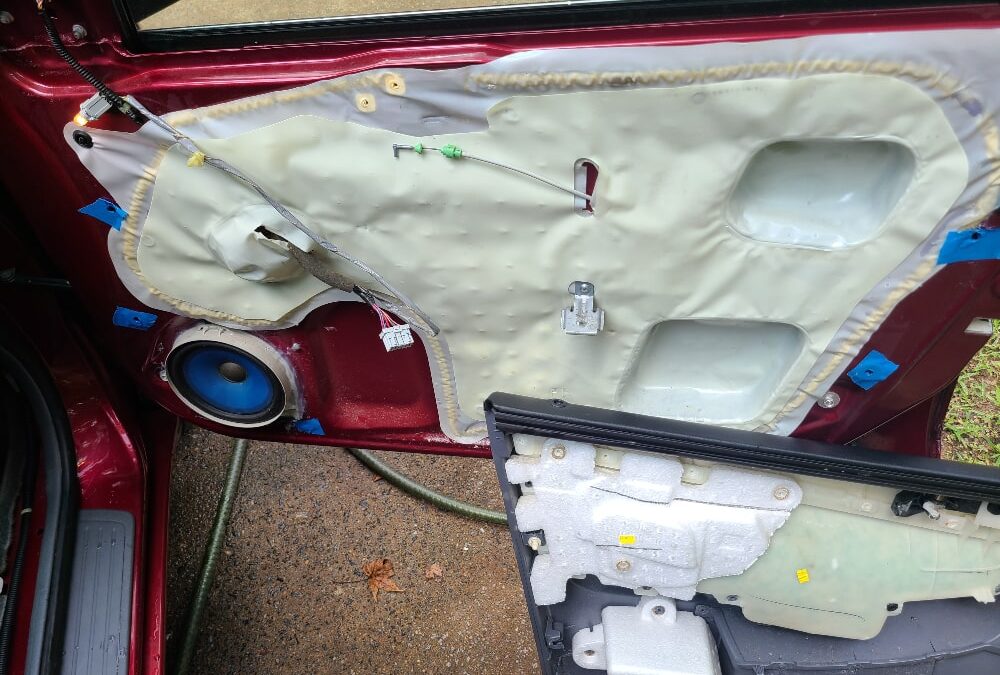
Every modern vehicle has a thin plastic sheet — sometimes called a door panel moisture barrier, door membrane, or car door plastic sheeting — sandwiched between the interior door panel and the metal door frame. This lightweight layer of polyethylene does one critical job: it keeps the water that gets into your door cavity from crossing over into your car's interior.
REALITY: water is supposed to get into your door. Rain, car-wash spray, and road splash all enter the cavity through gaps around the window channel — that's normal, and drain holes at the bottom let it flow back out. The vapor barrier is the last line of defense that makes sure that water drains down and out instead of soaking your carpet. When it fails, water gets a direct path inside every time it rains.
Why Car Door Vapor Barriers Fail
Vapor barriers are usually thin plastic bonded to the door frame with butyl rubber adhesive — that sticky black mastic. Over time, a few things break that seal:
Age and heat cycling: The adhesive dries out and loses its grip. Georgia's 90°F-plus summers are brutal on it — after years of heat, the seal cracks, peels, and pulls away from the frame.
Door panel removal: Any time a window regulator, lock actuator, or speaker is replaced, the panel comes off — and the barrier often gets torn, perforated, or re-stuck improperly. A single missed edge is all it takes.
Physical damage: Punctures from sharp objects, aftermarket speaker installs, and even aggressive cleaning can hole the membrane without anyone noticing.
Factory defects: Certain years of Ford, Chevrolet, and Honda models have shipped with barriers that don't fully seal the edges from the factory.
How to Tell If Your Door Vapor Barrier Is Leaking
Diagnosing a door leak isn't always straightforward, but these are the most reliable signs:
|
Wet front-side carpet On one or both front floors, especially after rain or a car wash. |
Water in the door panel Pooling in the door pocket or along the bottom of the panel. |
|
Musty odor after rain A moldy smell that gets stronger after wet weather. |
Saturated door foam Damp panel foam or staining along the door sill when you press on it. |
The DIY confirmation test
Remove the interior door panel, carefully peel back the vapor barrier, and look for watermarks, rust, or residue inside the door cavity. Then run a garden hose over the outside of the door while someone watches from inside — you'll see exactly where the water crosses through.
The Real Danger: Car Mold from Door Leaks
A leaking barrier doesn't just leave your carpet wet — it creates the perfect environment for mold. Carpet, foam, and the jute padding underneath are highly absorbent: once they get wet, they stay wet, and the dark, warm, humid space inside a door or under carpet is exactly where mold thrives. The EPA puts the colonization window at 24 to 48 hours — and a Georgia summer can shorten it. The species we most often find in vehicles from door leaks:
Beyond the health concerns, mold destroys carpet, eats through foam padding, and permanently stains door panels. By the time you can smell it, you may already be looking at a real remediation job — here's why car mold should be taken seriously.
How to Fix a Leaking Car Door Vapor Barrier
Replacing a vapor barrier is a manageable repair — it just takes patience and the right materials (a replacement barrier or cut-to-fit sheeting, butyl rope caulk, and plastic pry tools). The core of the repair is resealing the perimeter of the plastic sheet with a fresh, continuous butyl bead.
Already Have Mold? Don't Just Dry It Out
REALITY: drying the carpet and spraying air freshener doesn't kill mold — it just dries the surface while the root structure stays alive in the padding and subfloor. That's exactly why you can't spray the smell away.
Proper auto mold remediation means removing and inspecting the affected carpet and padding, replacing what's contaminated, treating porous surfaces, and using chlorine-dioxide gas — which we use instead of ozone because ozone degrades the very rubber and seals your door depends on — plus a ventilation-system purge and verification, all aligned to the ANSI/IICRC S520 standard. And critically, the moisture source gets sealed before anything is reinstalled.
This is the whole reason Car Mold Guys exists — and a door vapor barrier is squarely in our lane: we find the leak, repair the barrier, and remediate the mold, backed by a 90-day warranty and 100% mobile service across GA, SC, NC, TN, FL, and AL. We've seen what a two-inch gap can do over a full rainy season. Our car mold removal FAQ covers the rest.
Don't Wait — Water Damage Compounds Fast
A small tear might seem minor, but every rainstorm makes it worse: water saturates deeper into the padding, rust forms on the door frame, and mold spreads from carpet to seats to HVAC. What starts as a $50 repair becomes a $500 remediation job. The moment you notice wet carpet, a damp door panel, or a musty smell after rain, act on it — pull the panel, inspect the barrier, and fix the seal. If mold is already in the picture, call a professional who knows the difference between surface mildew and a colony growing beneath your floor mat. Your interior is worth protecting, and your lungs even more so.
Wet Carpet and a Musty Door? We Find It, Fix It, and Clear the Mold.
As the country's only specialists dedicated entirely to vehicle mold remediation, we trace the leak, reseal the barrier, remove the contamination, purge the ventilation system, and verify the air you breathe — backed by a 90-day warranty and 100% mobile service across GA, SC, NC, TN, FL, and AL.
Sources: EPA Mold Course · ChrisFix (DIY tutorials)