Air quality index

Air quality index

Air Quality Index

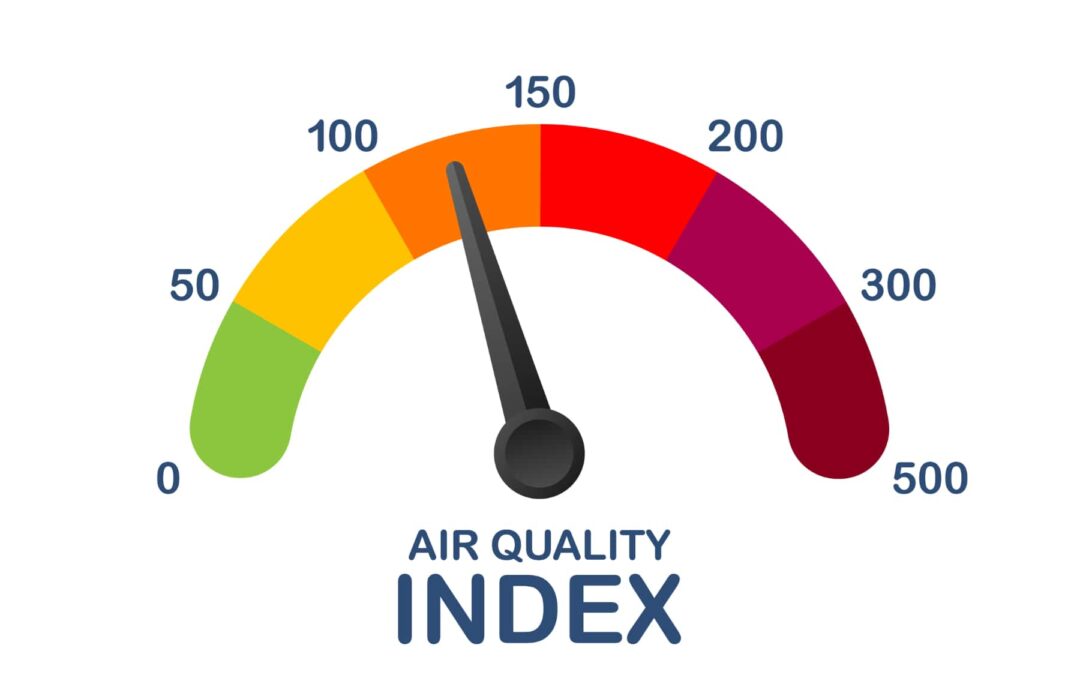
The Air Quality Index (AQI) is a numerical scale used to communicate the quality of the air to the public. It is measured by assessing the levels of specific air pollutants in the atmosphere, such as ground-level ozone, particulate matter, carbon monoxide, sulfur dioxide, and nitrogen dioxide. The AQI scale typically ranges from 0 to 500, with higher values indicating worse air quality.

To measure the AQI, monitoring stations collect data on these pollutant levels, usually on an hourly basis. The concentration of each pollutant is then converted to an individual AQI value using a standardized formula, which takes into account the pollutant’s health effects at various concentrations. The highest individual AQI value among the pollutants measured at a given location becomes the overall AQI for that area.

Six Categories of Air Quality

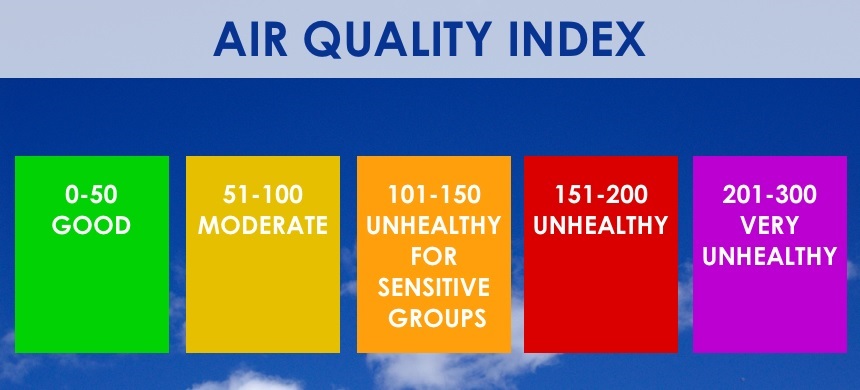
The AQI is divided into six color-coded categories, each representing a different level of health concern:

  1. Good (0-50): Air quality is considered satisfactory, and air pollution poses little or no risk.
  2. Moderate (51-100): Air quality is acceptable; however, there may be a moderate health concern for a very small number of people who are unusually sensitive to air pollution.
  3. Unhealthy for Sensitive Groups (101-150): Members of sensitive groups, such as children, older adults, and people with respiratory or heart issues, may experience health effects. The general public is not likely to be affected.
  4. Unhealthy (151-200): Everyone may begin to experience health effects, and members of sensitive groups may experience more serious health effects.
  5. Very Unhealthy (201-300): Health alert, meaning everyone may experience more serious health effects.
  6. Hazardous (301-500): Health warnings of emergency conditions, as the entire population is more likely to be affected.

Various organizations and government agencies around the world have their own AQI systems, which might have slight differences in pollutant concentrations, breakpoints, and categories. However, the general concept and purpose remain the same – to inform the public about the air quality and any associated health risks.


How AQI is Determined

How AQI is Determined

The Air Quality Index (AQI) is a numerical scale used to communicate how polluted the air currently is or how polluted it is forecast to become. The AQI incorporates multiple air pollutants and provides a single value to represent overall air quality. The specific pollutants considered in the AQI can vary by country, but commonly included pollutants are:

  1. Ground-level ozone (O3)
  2. Particulate matter (PM10 and PM2.5)
  3. Carbon monoxide (CO)
  4. Sulfur dioxide (SO2)
  5. Nitrogen dioxide (NO2)

The AQI is calculated based on the concentration levels of these pollutants. Each pollutant is assigned an individual index value, and the highest of these values is used as the overall AQI for a specific location and time. The AQI is typically reported on a scale from 0 to 500, where higher values indicate poorer air quality.

The general steps for calculating the AQI are as follows:

  1. Measure pollutant concentrations: The concentrations of each relevant pollutant are measured at various monitoring stations.
  2. Determine sub-index values: Each pollutant’s concentration is converted into a sub-index value using a specific formula. These formulas are often nonlinear and are designed to reflect the known health effects of each pollutant.
  3. Choose the highest sub-index: The highest sub-index value among all pollutants is selected as the overall AQI for that location and time.
  4. Interpret the AQI: The AQI is divided into categories or color-coded ranges that correspond to different levels of health concern. These categories typically range from “Good” to “Hazardous,” providing a quick indication of the potential health risks associated with the current air quality.

It’s important to note that different countries may use different AQI systems with variations in the pollutants considered, concentration ranges, and health categories. The AQI is a useful tool for informing the public about air quality and helping individuals take appropriate actions to reduce exposure when air quality is poor.

Call Today!