
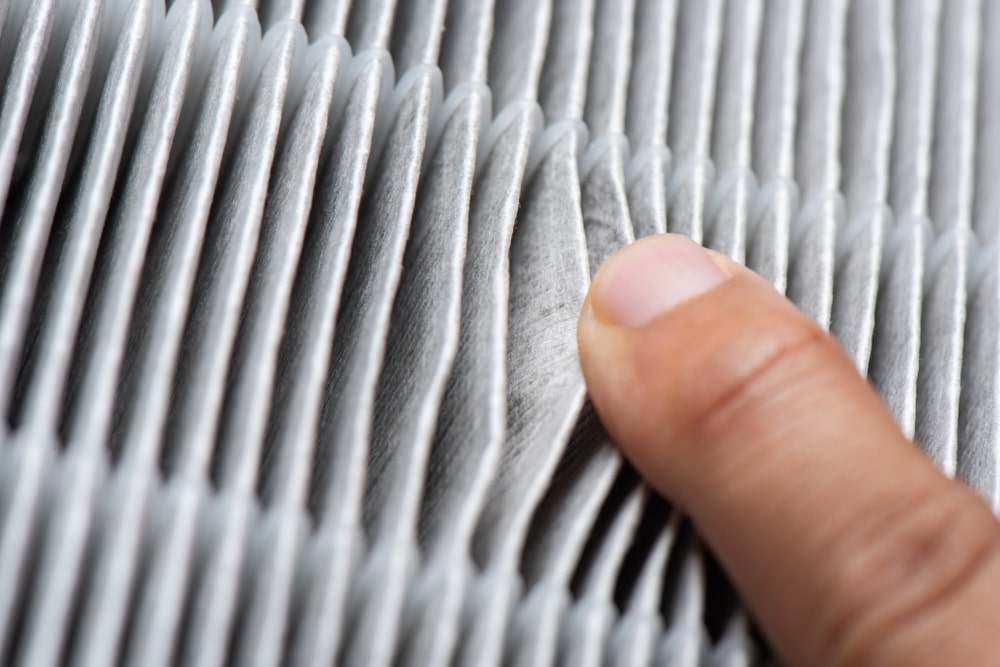

MERV vs. HEPA: How Air Filters Actually Work
When it comes to air filters, the difference between MERV and HEPA trips up a lot of people — and choosing wrong can mean either wasted money or an underperforming system. Both trap airborne particles like dust, pollen, and mold spores, but they're rated differently, used differently, and suited to different situations. Here's a clear breakdown of how each works, when to use which, and — since clean air matters just as much inside your vehicle — what it all means for the cabin filter you breathe through every drive.
What Is a MERV Rating?
MERV stands for Minimum Efficiency Reporting Value, a standardized rating developed by ASHRAE. The scale runs from 1 to 16 and measures how effectively a filter captures particles from 0.3 to 10 microns. Think of it like SPF for sunscreen — the higher the number, the more protection:
MERV 1–4: Entry-level. Catches lint, dust mites, and pollen — window AC units and basic furnace filters.
MERV 5–8: Mid-range. Captures mold spores, pet dander, and finer dust — a solid choice for most homes.
MERV 9–12: Higher efficiency. Blocks lead dust, auto emissions, and fine particulates — good for mild allergy sufferers.
MERV 13–16: Near-HEPA. Traps bacteria, smoke, and some viruses — hospitals, commercial buildings, high-demand homes.
For most homes, a MERV 8 to MERV 13 filter strikes the right balance between air quality and HVAC compatibility. The EPA recommends selecting a filter rated at least MERV 13, or as high as your system will accommodate — a strong baseline that improves indoor air without overburdening most residential systems.
What Is a HEPA Filter?
HEPA stands for High-Efficiency Particulate Air. Unlike MERV, which is a rating scale, HEPA is a strict performance standard: to qualify, a filter must capture at least 99.97% of all airborne particles 0.3 microns or larger — pollen, mold spores, dust-mite debris, pet dander, bacteria, and even some viruses. Originally developed during the Manhattan Project to contain radioactive particles, HEPA is now the gold standard for critical filtration, found in hospital operating rooms, pharmaceutical cleanrooms, high-end air purifiers, allergy vacuums, and aircraft cabin systems.
MERV vs. HEPA: The Core Differences
These aren't competing products you swap into the same slot — they work in different contexts. On efficiency, a MERV 16 filter captures roughly 95% of particles in the 0.3–1.0 micron range; true HEPA captures 99.97%. That gap matters most for immunocompromised people or during wildfire-smoke events. On placement, MERV filters live inside central HVAC ductwork for whole-home coverage, while HEPA filters live in standalone purifiers — most home HVAC systems can't handle HEPA's airflow resistance without straining the blower. And on cost, MERV is far cheaper ($15–$30 for a quality MERV 13) versus $40–$100-plus for HEPA purifier filters.
Head-to-Head Comparison
| Feature | MERV | HEPA |
|---|---|---|
| Efficiency | Varies by rating (MERV 1–16) | 99.97% at ≥0.3 microns |
| Best application | Whole-home HVAC | Portable purifiers, critical spaces |
| Typical cost | $5–$30 per filter | $40–$100+ per filter |
| Airflow impact | Low to moderate | High — needs compatible system |
| Replacement | Every 1–3 months | Every 6–12 months |
| Best for | General air quality, allergens | Severe allergies, asthma, immunocompromised |
| DIY install | Yes — standard slot | Purifiers yes; whole-home no |
REALITY: more is not always better. Jumping to the highest MERV you can find can backfire — if your system isn't rated for it, the added airflow resistance strains the blower, raises energy bills, shortens equipment life, and can actually worsen circulation. Always check your HVAC manufacturer's recommendation before upgrading.
Which Filter is Right for You?
- You're filtering through a standard residential or commercial HVAC system
- You want better whole-home air quality without major cost or modifications
- You have mild to moderate allergy concerns
- You want a cost-effective, scalable solution
A MERV 13 filter is the sweet spot many HVAC pros and the EPA recommend — strong particle capture, broad compatibility.
- Someone in your home has severe allergies, asthma, or a compromised immune system
- You live with frequent wildfire smoke or heavy outdoor pollution
- You want a room-level purifier to supplement HVAC filtration
- Your system is specifically built to handle HEPA-level resistance
For most households, the best approach is both: a MERV 13 in the HVAC plus a portable HEPA purifier in the bedroom.
Your Car's Cabin Air Filter: the MERV That Touches You Daily
Here's the part most filter guides skip: your car has an air filter too. Tucked behind the glove box, the cabin air filter cleans the air your vents push onto you — and most factory cabin filters are basic, low-grade particulate media that let finer particles, including mold spores, slip right through.
The Filter You Breathe Through Every Commute
As part of every remediation, Car Mold Guys replaces the cabin air filter with a MERV 13-grade filter and disinfects the housing — because a high-rated filter is only as clean as the system it sits in.
That last point matters. A premium cabin filter does nothing if the ductwork behind it is already contaminated — the HVAC system is one of the most common mold reservoirs in a vehicle, which is why our full vehicle mold remediation pairs a fresh filter with a full ventilation-system purge. The EPA reaches the same conclusion for homes: air cleaners and HVAC filters don't address the cause of mold or musty odors, because the cause is a moisture problem. Filtration captures particles, but it can't fix a contamination source — that's the whole reason you can't filter or spray a moldy car clean, and why cabin air quality is worth taking seriously.
Pro Tips for Any Air Filter
- Size matters. An ill-fitting filter lets unfiltered air bypass it entirely. Measure the slot precisely and match the exact dimensions.
- Change on schedule. A clogged filter becomes a restriction, not a protector. Homes with pets or dusty conditions may need monthly changes.
- Combine strategies. Filtration is one piece — pair it with source control: manage humidity, use exhaust fans, and minimize chemical off-gassing.
- Match the contaminant. Particulate filters miss gases and odors; for mold smells or VOCs, add an activated-carbon filter alongside your MERV or HEPA media.
The Bottom Line
There's no single winner in MERV vs. HEPA — only the right answer for your situation. MERV offers versatility, affordability, and whole-home coverage; HEPA delivers elite capture for critical environments and serious respiratory needs. For most homes, a MERV 13 in the HVAC plus a HEPA purifier in the bedroom is the best of both worlds. And don't forget the smallest, most personal filter you own — the one in your car. Upgrading from a bargain-bin filter to a rated solution, at home and in the cabin, is one of the simplest things you can do for the air you breathe. Curious what a full vehicle treatment involves? Our car mold removal FAQ walks through it.
Musty smell from your vents? A new filter won't fix the source.
As the country's only specialists dedicated entirely to vehicle mold remediation, Car Mold Guys purges the ventilation system, removes the contamination, installs a MERV 13-grade cabin filter, and verifies the air you breathe — backed by a 90-day warranty and 100% mobile service across Georgia, South Carolina, North Carolina, Tennessee, Florida and Alabama.