

Why Your Car's AC Condensate Drain Clogs — and How It Turns Into a Wet, Moldy Mess
You get in your car on a hot Georgia afternoon, crank the AC, and notice something unsettling — the carpet under the passenger seat is soaking wet. You haven't driven through a flood. The windows weren't cracked. So where is the water coming from?
Nine times out of ten, the culprit is a clogged AC condensate drain tube. It's one of the most overlooked problems in automotive maintenance, and left alone, it can quietly turn your interior into a breeding ground for mold and mildew. Below, we break down exactly what's happening inside your AC system, why the drain clogs, the damage it causes, and how to fix it before things get out of hand. It's one of several common vehicle water-leak sources we see constantly.
How Your Car's AC System Makes Water
Your air conditioning doesn't just cool the air — it dehumidifies it. As warm, humid air passes over the evaporator coil behind your dashboard, moisture condenses on the coil's cold surface, the same way a cold glass sweats on a hot day.
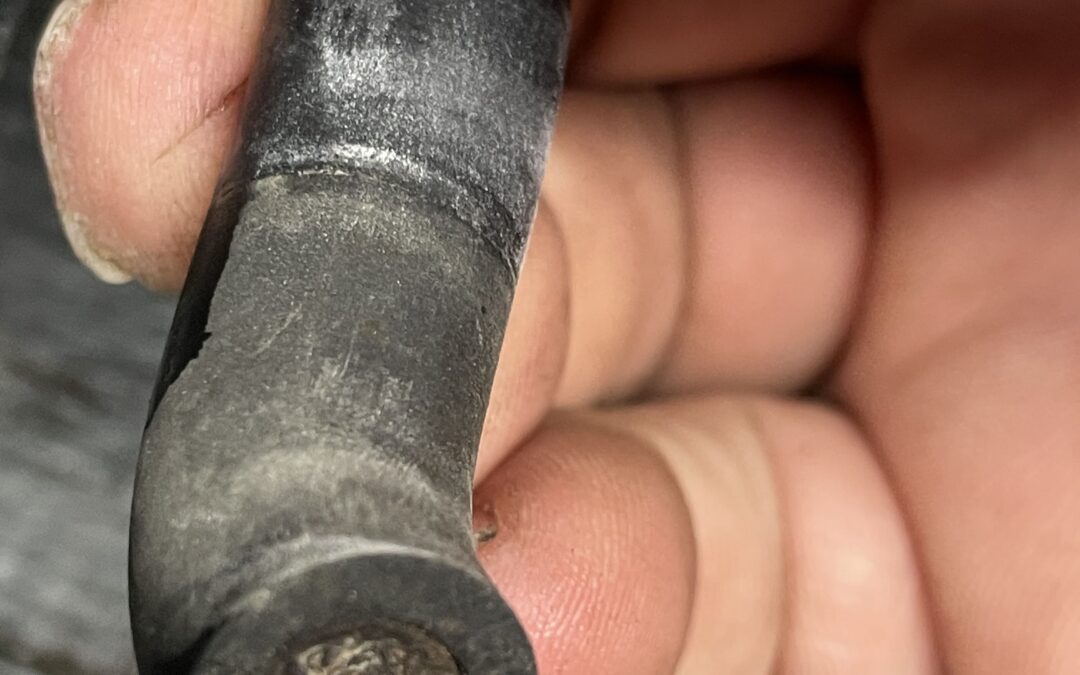
Under normal conditions, that condensate drips into a drain pan and exits through a small rubber or plastic tube that runs through the firewall and drips harmlessly onto the ground. That little clear puddle under a parked car on a hot day? That's the system working exactly as designed. The trouble starts when that tube — the evaporator drain, or condensate drain line — gets blocked.
What Causes the Drain to Clog?
The drain tube sits in a warm, damp, enclosed space — ideal conditions for buildup. The usual offenders:
Dirt, dust & debris: Road dust and cabin particles collect in the pan and form a sludgy paste that restricts flow.
Biological growth: Algae, mold, and mildew thrive in the damp pan and can grow right into the tube, blocking it entirely — very common in humid climates like Georgia where the AC runs nearly year-round.
Leaves & organic material: Debris pulled in through the cabin air intake works its way into the drain system.
Kinked or pinched hose: In tight routing, the tube can crimp over time — often after underhood work.
Improper installation: On older or repaired vehicles, a tube reinstalled at the wrong angle defeats gravity drainage.
What a Clogged Drain Does to Your Interior
When the condensate has nowhere to go, the pan overflows and the water takes the path of least resistance — straight into your cabin. Because the evaporator usually sits on the passenger side of the dash, that's where the overflow shows up first: soaked carpet and floor mats, with the padding underneath acting like a sponge that holds moisture for days or weeks. Then comes the musty odor every time the AC runs — a near-certain sign mold has already taken hold — and, given warmth and darkness, active mold growth across carpet, seat foam, and even firewall insulation.
⚠️ Water and under-dash electronics don't mix
Modern vehicles pack a staggering amount of electronics under the dash and seats — seat modules, airbag sensors, control units. Water intrusion can cause shorts, blown fuses, and outright component failure, and repair bills in this area can climb into the thousands. A “small” drain clog is not a small problem.
Warning Signs to Watch For
Don't wait for a soaked floor. These are the early tells:
|
Damp passenger-side carpet The most common first sign — check the floor and under the mat. |
Musty smell with the AC on A mildewy odor from the vents means moisture is already lingering. |
|
Sloshing sounds in the dash Water you can hear moving means the pan is backing up. |
No puddle under the car On a hot day with the AC running, no drip outside means it's draining inside. |
How to Unclog Your AC Condensate Drain
The good news: clearing the drain is often a DIY-friendly job. Here's the typical sequence.
Don't Skip This: Dry Out the Interior Completely
REALITY: clearing the clog turns off the faucet — it does nothing for the water already soaked into the carpet padding. That trapped moisture is what grows mold, which is why drying the interior, not just unclogging the tube, is the step that actually protects your car.
Carpet padding is essentially a foam sponge, and it won't dry on its own. Left damp beyond 24 to 48 hours, mold begins to grow — the EPA puts that colonization window squarely in that range. By the time you can smell it, it's already well established. Proper drying means pulling the affected mats and carpet, extracting standing water from the padding, and running air movers and dehumidifiers to drive moisture out of the structural layers. In many cases the padding has to be removed and replaced, because it holds mold even after the surface looks clean.
And if mold is already present, surface cleaning isn't enough. Real vehicle remediation means containment, removal of contaminated materials, chlorine-dioxide gas treatment (which we use instead of ozone, since ozone degrades your rubber seals), a ventilation-system purge — critical here, since the clog lives inside the HVAC system that's a primary spore reservoir — and post-remediation verification. These are the same ANSI/IICRC S520 principles used in building remediation, applied to a vehicle. It's also why you can't just spray the smell away.
When to Call a Professional
If you've cleared the drain but the interior is still wet, smells musty, or shows any discoloration on the carpet or upholstery, it's time to bring in a specialist. Car Mold Guys handles exactly this scenario — we've seen the full spectrum, from a minor damp spot that needed a simple dry-out to vehicles with months of undetected clogs that required a full interior tear-down and remediation. Vehicle mold remediation is all we do, aligned to the ANSI/IICRC S520 standard, backed by a 90-day warranty, and 100% mobile across GA, SC, NC, TN, FL, and AL. Our car mold removal FAQ answers the questions we hear most, and you can scan for other common leak sources while you're at it.
Wet Carpet and a Musty AC? Let's Get Ahead of the Mold.
As the country's only specialists dedicated entirely to vehicle mold remediation, we dry it out, remove what can't be saved, purge the ventilation system, and verify the air you breathe — backed by a 90-day warranty and 100% mobile service across GA, SC, NC, TN, FL, and AL.
Source: EPA Mold Course, Chapter 2