
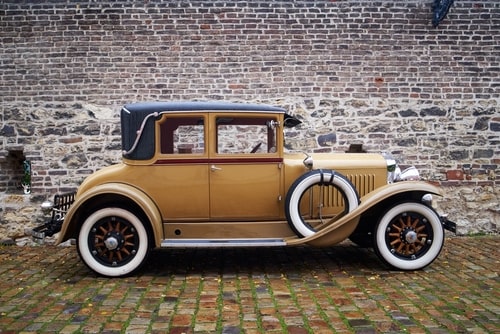

Classic Car Mold Prevention: Protecting a Collector's Investment
A classic car is more than transportation — it's an investment, a restoration, and often a labor of love. Mold threatens all three. It stains original upholstery, rots foam and carpet, leaves a musty odor that's hard to shake, and quietly erodes the value you've worked to preserve. The good news: with the right habits, it's almost entirely preventable.
Classic cars face mold on two fronts that most owners only half-cover. They sit for long stretches — sealed up, with no airflow, where humidity collects. And after decades on the road, their seals, weatherstripping, and drain tubes harden and fail, letting water in. Guard against the first and miss the second, and mold still finds its way in.
Why Classic Cars Are Especially Vulnerable
A daily driver gets aired out constantly — doors opening, windows down, fresh air cycling through. A garaged classic doesn't. It can sit sealed for weeks or months, and any moisture trapped inside has nowhere to go. Add the natural materials common in older interiors — wool carpet, leather, cotton and horsehair padding, even wood trim — and you have exactly the organic, damp environment mold loves.
The overlooked half: aging seals leak
Rubber doesn't age gracefully. Over decades, door and trunk weatherstripping hardens and cracks, sunroof drain tubes clog or disconnect, and cowl and window seals shrink away from the body. The result is slow water intrusion you may never see — and a climate-controlled garage won't stop a leak that's already inside the car.
Your Classic Car Mold-Prevention Playbook
|
Store it climate-controlled A well-ventilated, climate-controlled garage or storage unit keeps temperature and humidity steady — the single biggest factor in mold risk. |
Control the humidity Keep relative humidity under 60% with a dehumidifier, track it with a hygrometer, and drop moisture absorbers (silica or DampRid) inside the cabin for long storage. |
|
Choose a breathable cover Use a moisture-wicking cover made for the purpose. Never a plastic tarp — it traps condensation against paint and interior, making mold worse. |
Keep air moving Crack the windows slightly and run a fan in the storage space. Dead, sealed air is what lets trapped moisture settle into fabric and padding. |
|
Inspect on a schedule Check for a musty smell, damp carpet, and hardening seals before they turn into a problem. Early detection saves originality. |
Mind the materials Original wool, leather, and natural padding are mold-prone and costly to replace. Keep them clean and dry, and address spills the moment they happen. |
The 60% rule
Mold needs moisture to grow, so humidity is your first line of defense. Below 60% relative humidity, mold struggles to colonize; above it, the odds climb fast. A $15 hygrometer takes the guesswork out — pair it with a dehumidifier in the storage space and a moisture absorber in the cabin, and you've removed mold's most important ingredient. For the full picture, see our guide to mold and moisture.
Don't Overlook the Leaks
Humidity control matters, but in our experience nearly every serious car-mold case traces back to water getting in — and on an older vehicle, the usual suspects are all wearing out at once. These are the spots worth checking on any classic:
Sunroof drain tubes — clog with debris or pull loose with age, sending water into the headliner and carpet. (More on sunroof leaks.)
Door & trunk weatherstripping — decades-old rubber hardens, cracks, and shrinks away from the body. (Trunk leaks explained.)
Door vapor barriers — the plastic sheet behind the panel fails or gets disturbed, letting water reach the cabin. (Vapor barrier leaks.)
Cowl & window seals — blocked cowl drains and perished window gaskets are classic entry points on older builds.
Finding the exact source can be tricky — water travels far from where it enters. That's why Car Mold Guys uses hydro testing to pinpoint and repair the leak first, so prevention actually sticks. A list of the most common leak points is a good place to start your own inspection.
If You Already Spot Mold
⚠️ Go easy on the DIY chemicals
Bleach and harsh mold sprays can permanently stain or destroy original leather, wool, and wood — and they don't reach the roots growing down in the padding, so the mold returns. On a collector car, the wrong cleaner can cost far more than the mold itself.
Real remediation goes deeper than wiping a surface. The mold-contaminated foam padding has to come out and the substrate has to be dried completely, the affected surfaces treated with chlorine dioxide — not ozone, which degrades the very rubber seals a classic can't easily replace — the ventilation system purged, and the moisture source fixed for good. Car Mold Guys does all of it to the ANSI/IICRC S520 standard, and we come to you — 100% mobile, so a delicate classic never has to be driven or towed across town to get it done.
The Bottom Line
Protecting a classic from mold comes down to two habits: control the moisture, and respect the leaks. Keep humidity down, keep air moving, use the right cover, and inspect those aging seals before they let water in. Do that, and your prized possession stays the timeless treasure it should be. If mold has already appeared — or you'd rather have an expert confirm your storage setup is sound — the specialists at Car Mold Guys are here to help.
Keep Your Classic a Timeless Treasure
Whether you've found mold or just want peace of mind before long-term storage, the specialists at Car Mold Guys can find hidden leaks, remediate safely with chlorine dioxide, and protect your interior's originality — mobile to your garage, backed by a 90-day warranty across GA, SC, NC, TN, FL, and AL.
Source: EPA — A Brief Guide to Mold, Moisture, and Your Home